

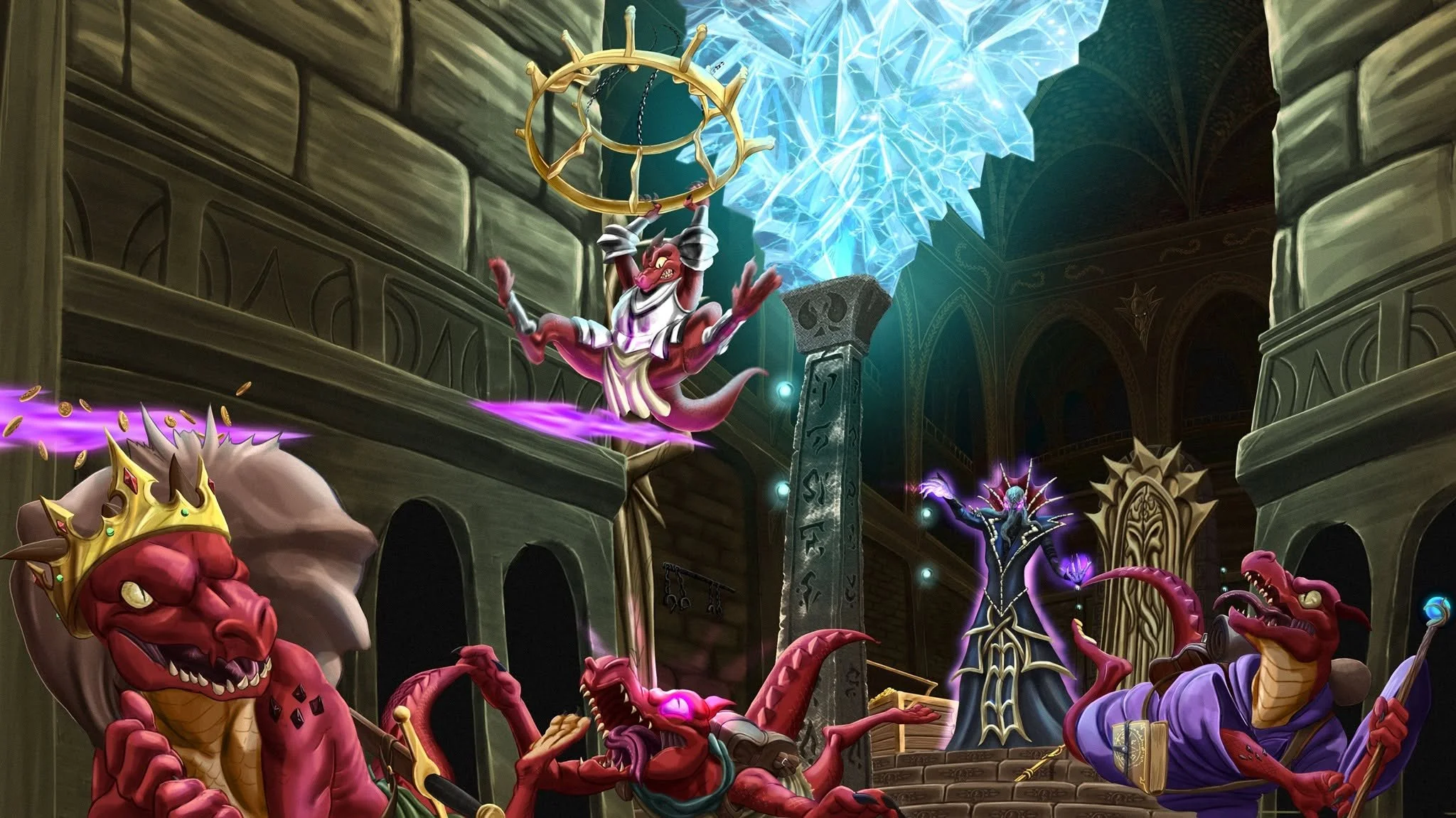
The Clans Are Banished to the Surface!
(2018)
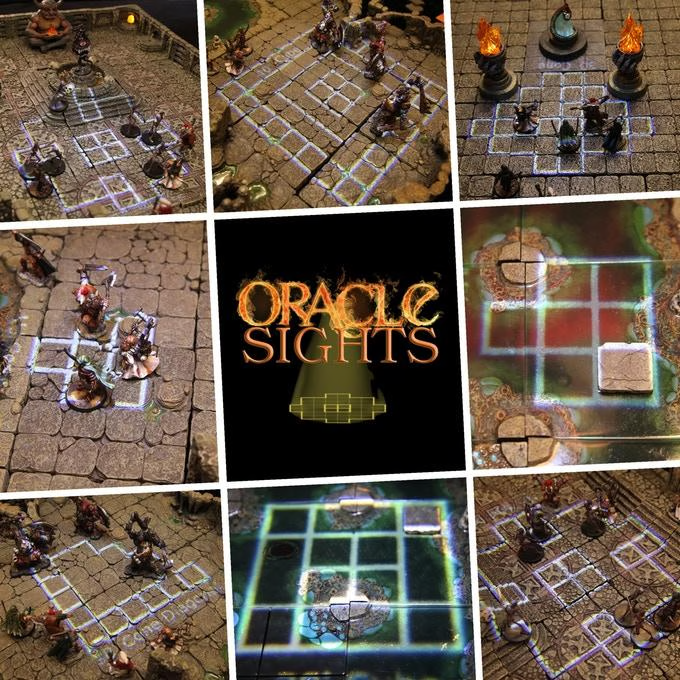
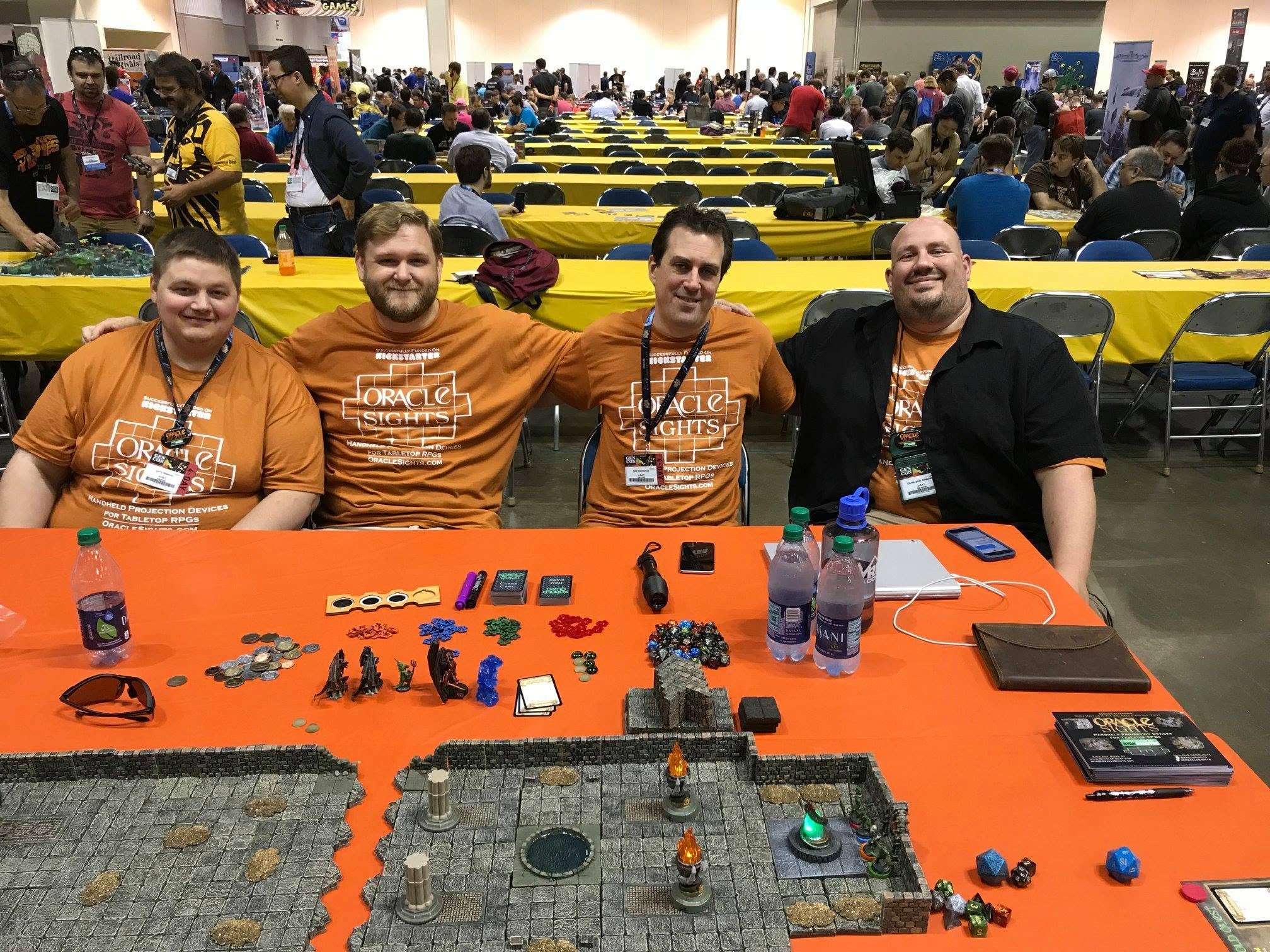
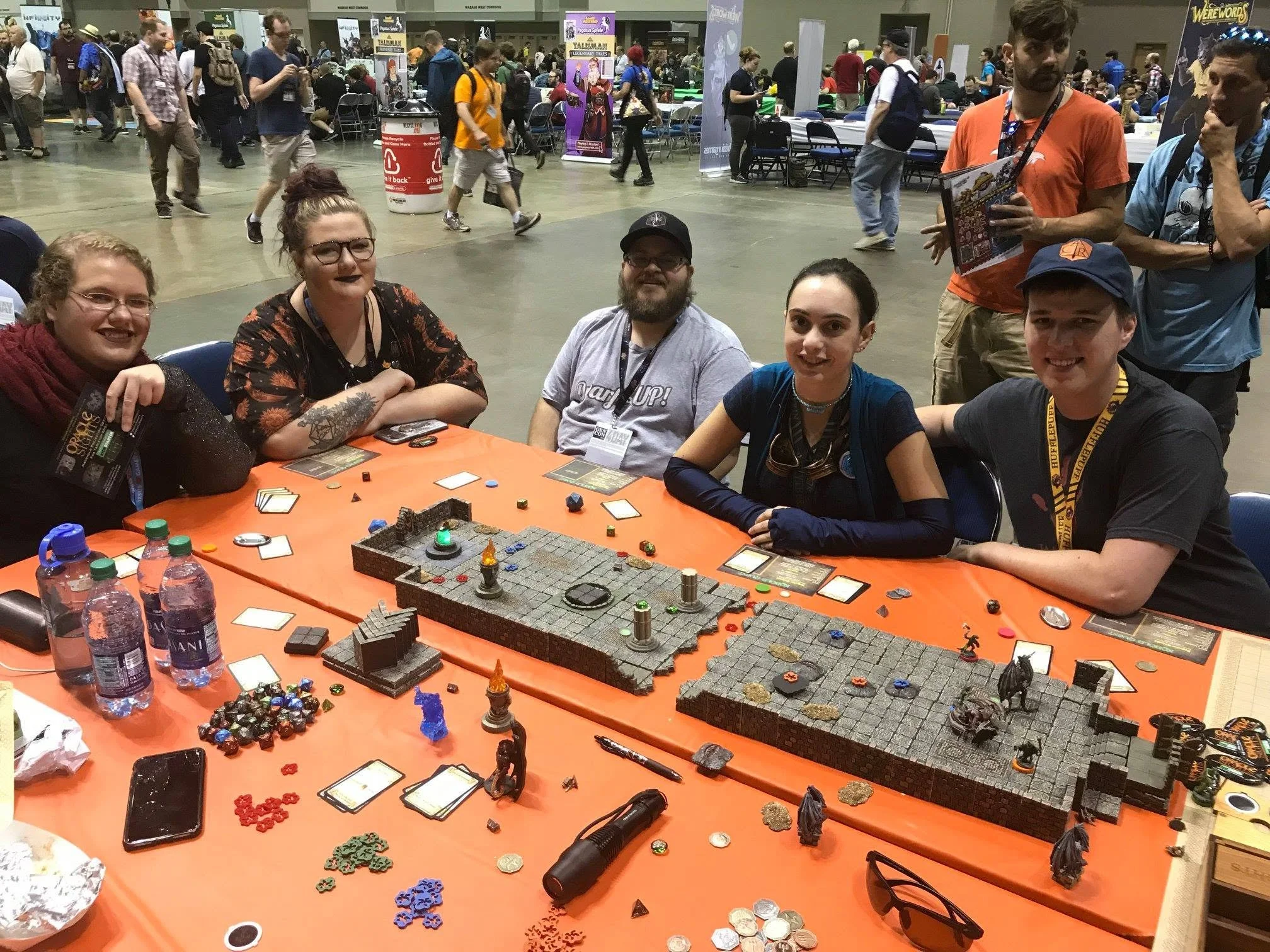
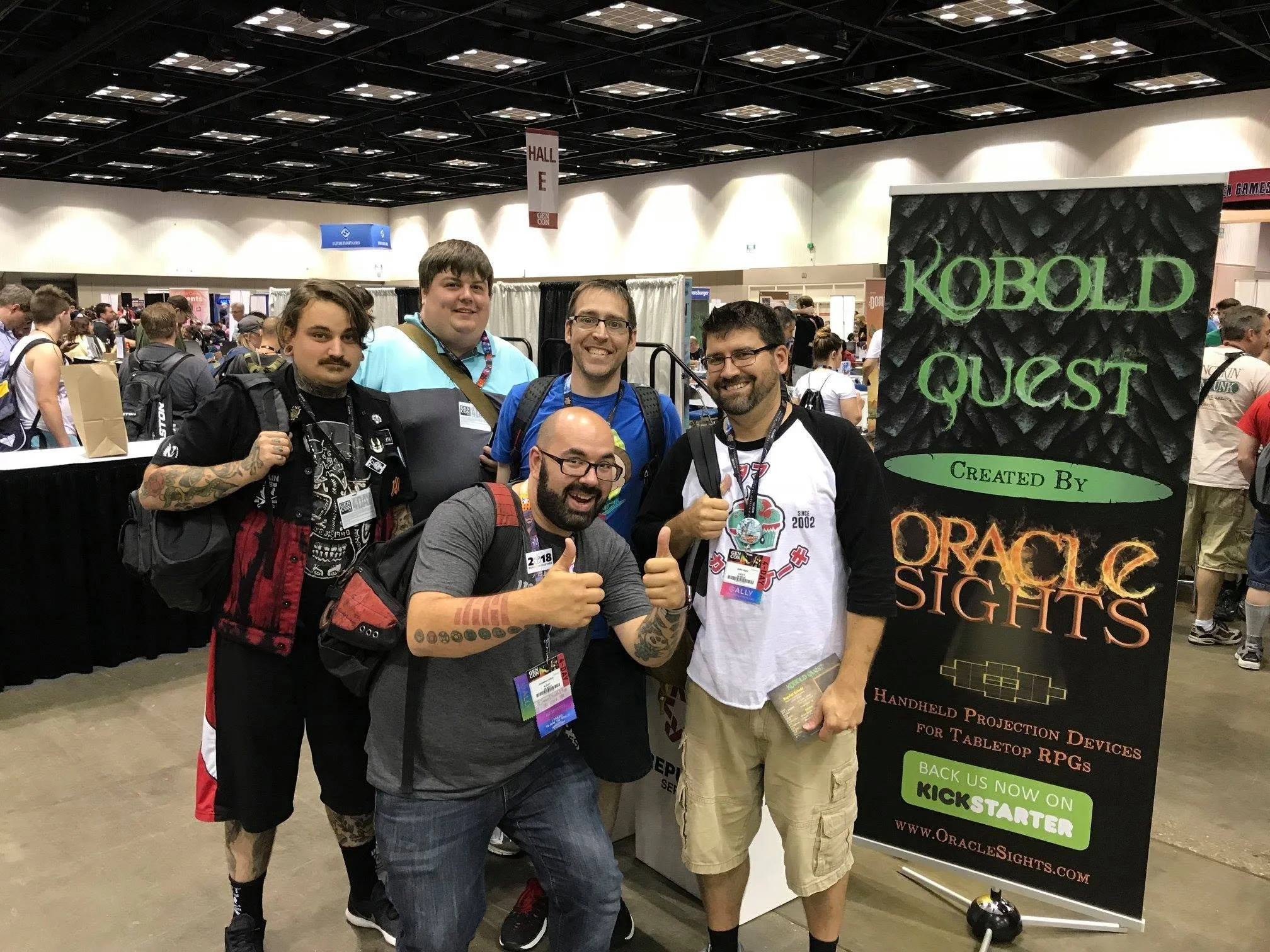
In 2016, I had an idea to make projection devices for D&D. After years of R&D with my partner Corry, we debuted the Oracle Sight during GenCon 2018 and ran a successful Kickstarter Campaign. That same year, we faced an unexpected challenge:
How do we show off the Oracle Sight to a group of D&D players who are used to 4+ hour sessions... in a fast, fun, one-hour experience?
The mission wasn’t just to simplify D&D. It was to give players an experience they would never forget. The game embraced absolute chaos, out went the character sheets; out went the complicated rulesets, everyone got a pile of ridiculous items, a d20, and ONE SINGULAR OBJECTIVE:
ESCAPE THE DUNGEON
Kobold Quest was born.
Players took on the role of kobolds who had unionized and were desperate to escape the trapped dungeon of their now former overlord.
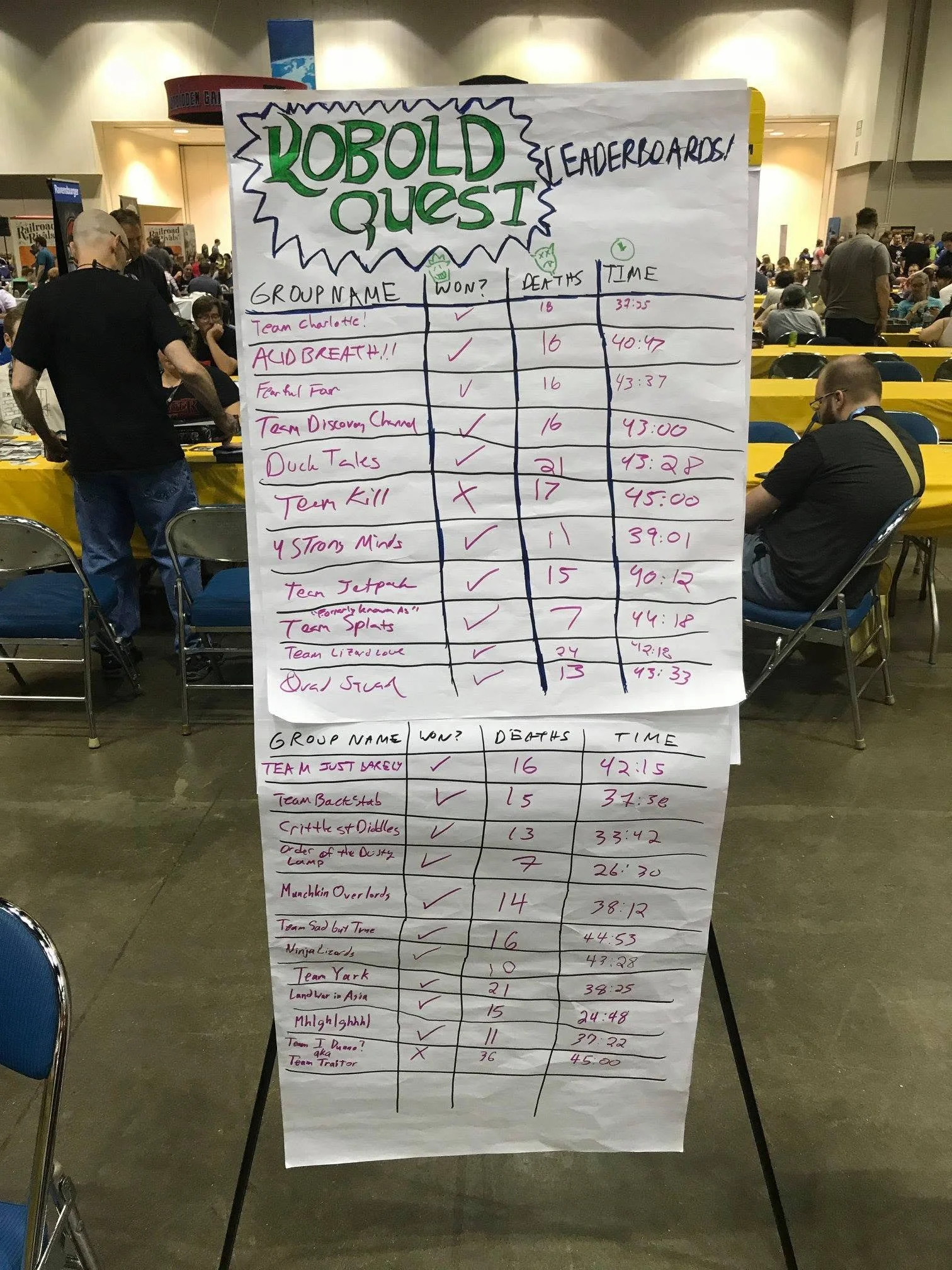
The game featured item cards, almost no rules, a d20, and limitless player-driven improvisation. The first kobold to escape the dungeon won.
Unfortunately, Oracle Sight eventually came to an end. We hit market saturation, and when the pandemic disrupted our suppliers, we were forced to close that chapter.
BUT KOBOLD QUEST LIVED ON…

ORBITAL HEIST
&
Kobold Game Labs
(2020)
The pandemic hit.
Oracle Sight came to an end, but I couldn't stop thinking about Kobold Quest. Why had players connected with it so strongly? What made people come back year after year to play a game they already knew? I realized it wasn't the dungeon. It wasn't the fantasy setting. It was the stories.
Every table became its own adventure. Every impossible plan created another unforgettable moment.
So the next challenge became clear:
How do you put that experience into a box?
I dove back into playtesting, studying player feedback, convention stories, and years of hard-earned lessons.
This time, I left the dungeon behind.
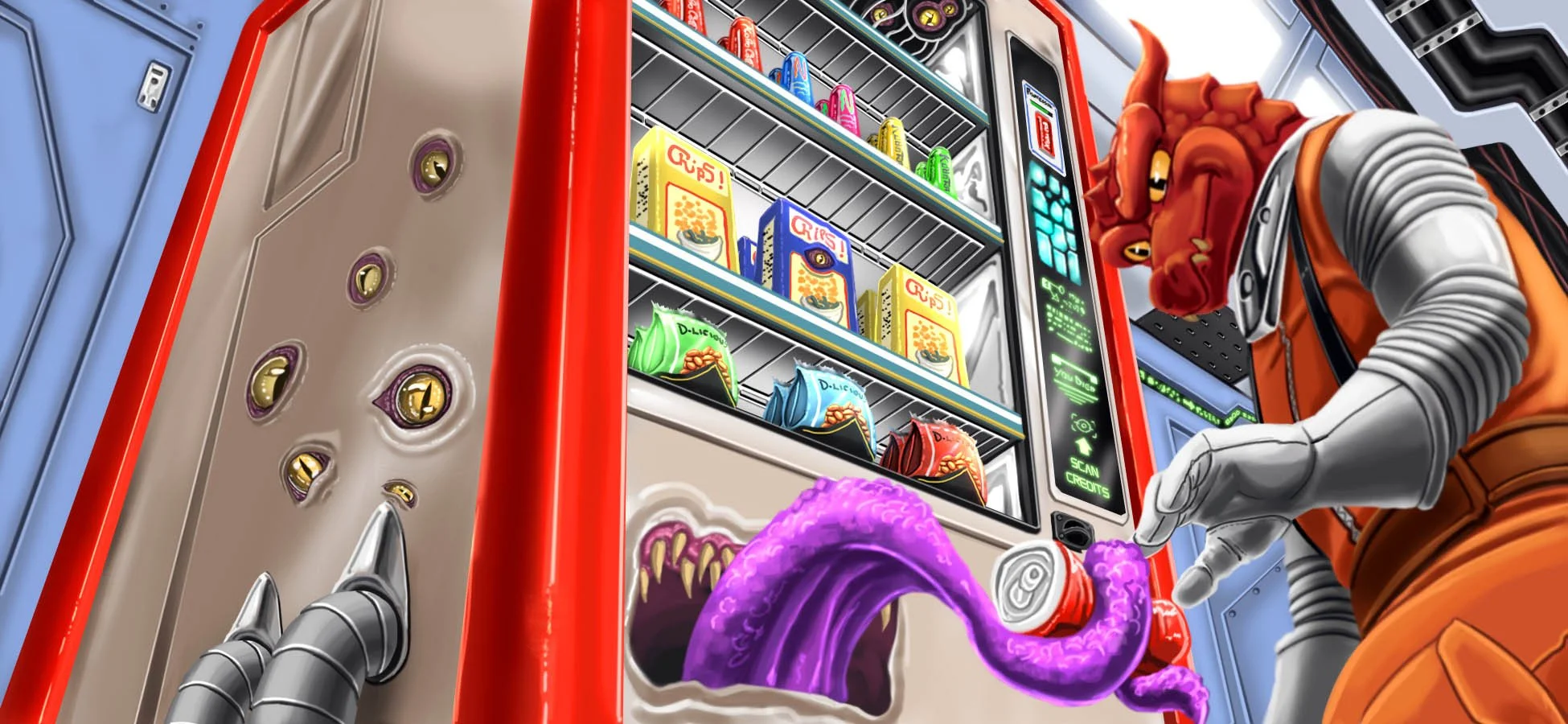
The kobolds found themselves in a magipunk future—a setting filled with arcane technology, unstable gadgets, and infinitely more things that could explode.
The shift wasn't just practical. It opened the door to entirely new ideas and gave us the freedom to build a world all our own.
The very first prototype was nothing more than a stack of index cards spread across a table.
From there, it evolved into a modular, hex-based spaceship crawler where the station itself grew as players explored it.
In 2023, after years away, I returned to Gen Con to debut Kobold Quest: Orbital Heist.
The response was fantastic.
But after another year of playtesting, I realized I had a new problem. The game had become too balanced. Every mechanic that made it cleaner also made it a little less surprising. Games took longer to finish. The rules became harder to expand.
And the narrative—the thing players loved most—was slowly being sacrificed in the name of rules, mechanics, and a prebuilt mission on a rail.
At the same time, Orbital Heist’s physical footprint made manufacturing increasingly expensive, and global uncertainty meant production costs could change dramatically overnight.
For the first time since Kobold Quest was created... I stopped trying to improve the game. Instead, I started asking a different question.
What if I was solving the wrong problem?
After convention after convention, I found myself dreading the same feedback. "The game started to drag."
Something wasn't right.
I stopped chasing perfect mechanics. I stopped chasing perfect balance. I remembered why I'd built Kobold Quest in the first place. It was never about building the perfect game.
It was about creating joy.
About watching complete strangers sit down at a table and leave laughing about a story they'd made together. It was time to pick up the original threads and weave them back together into something new. A chaotic, beautiful tapestry of player-driven storytelling. The kind of game I ran back in 2018.
Only this time... with better cards. Better artwork. A western frontier. And an uncompromising focus on chaos, improvisation, narrative, and unforgettable experiences.
I didn't want players solving my story.
I wanted to build the perfect playground for them to create their own.
The very first mission was simple: "Board a train. Rob it." That's it.
We started the game by asking each player "why are you getting on this train." We compiled the results and a story was born. Each table had their own reasons. Some got on it to get the Eye of the Beholder. Others got on it for revenge against the boss. Still others were more clueless. It's a train. Of course we're going to rob it. There's a shiny too? Neat!
Some groups boarded in secrecy. Others went in guns blazing. Others tried some combination and failed spectacularly. The world changes with the players — I wrote a rough framework to reward the clever ones and hand out consequences for the guns-blazing groups. Unless they got all the witnesses in time.
Another key part of the game is player expectations. I love flipping them on their heads. Keep them guessing. The first group opened the first train car and found a BearOwl quietly waiting to say hello. At that moment, every player at the table realized the same thing: they had absolutely no idea what was going to happen next.
The next car held wyverns that smelled blood — and they were going to escape. Once loose, they became a new flying threat to anything on the board. The car after that held an immature eye tyrant. Anybody within a train car's distance suffered a psychic assault.
Then, suddenly, the train you actually came to heist showed up — coming in the opposite direction. Jump over. Now. Some groups made the leap. Others just derailed both trains and let me sort it out.
Somewhere near the end they found the boss: a telekinetic Brainkiller, floating six revolvers around himself like deadly satellites. Some tried to negotiate. Others charged in, guns blazing.
And every group walked away talking about the adventure they had created together.
I was having fun running again.
I couldn’t wait to see what the players would do, to watch the story unfold, to see the thrill and joy in their eyes. I was EXCITED to run the next session. That's when it hit me.
I wasn't making adventures. I was building a system that creates stories.
Everything else fell into place. The missions became easier to write because I stopped trying to answer every question. Instead... I started leaving holes on purpose.
Not because I didn't know the answers. Because I knew the players would come up with something better together.
That's the entire philosophy behind ScrapWyrm Games.
The best stories don't come from the rulebook.
They come from the people sitting around the table.
That's the game I've been trying to build since 2018.
The ScrapWyrm Games Philosophy:
We build the playground.
You write the legends.
Thank you for taking the time to read our story.
Whether you're joining us for your first adventure or your fiftieth, we're grateful you're here.
We can't wait to see the stories you create.
-Shawn Fortier
Founder & Lead Designer
ScrapWyrm Games LLC
THE BIRTH OF SCRAPWYRM GAMES


KOBOLD QUEST: ORBITAL HEIST
2020-Present — Currently On Hold
After Oracle Sight, the question became:
How do you put Kobold Quest in a box?
Orbital Heist was the answer — a modular, hex-based space station crawler for up to 7 players. Kobolds. A space station. A terrifying psychic entity called the BRAINKILLER floating six revolvers around itself like deadly satellites. One Orb of Pondering. One way out.
Only one kobold could leave the station. The rest? Expendable. Probably.
The game featured randomly generated station layouts, a clone bay respawn system, and the same card-powered chaos that made Kobold Quest a convention favorite — now set against a magipunk sci-fi backdrop designed to sidestep fantasy IP headaches entirely.
After years of playtesting and refinement, the game became — ironically — too refined. Too balanced. The rules got tighter. The surprises got fewer. The narrative freedom that players loved started disappearing in the name of mechanical polish.
That tension led to the question that built ScrapWyrm Games:
What if we were solving the wrong problem?
Orbital Heist is currently on hold due to global manufacturing uncertainty and tariff instability.
One day we’ll revisit Orbital Heist. The kobolds are still up there. The BRAINKILLER is still waiting.
Please use your clone bays responsibly.